
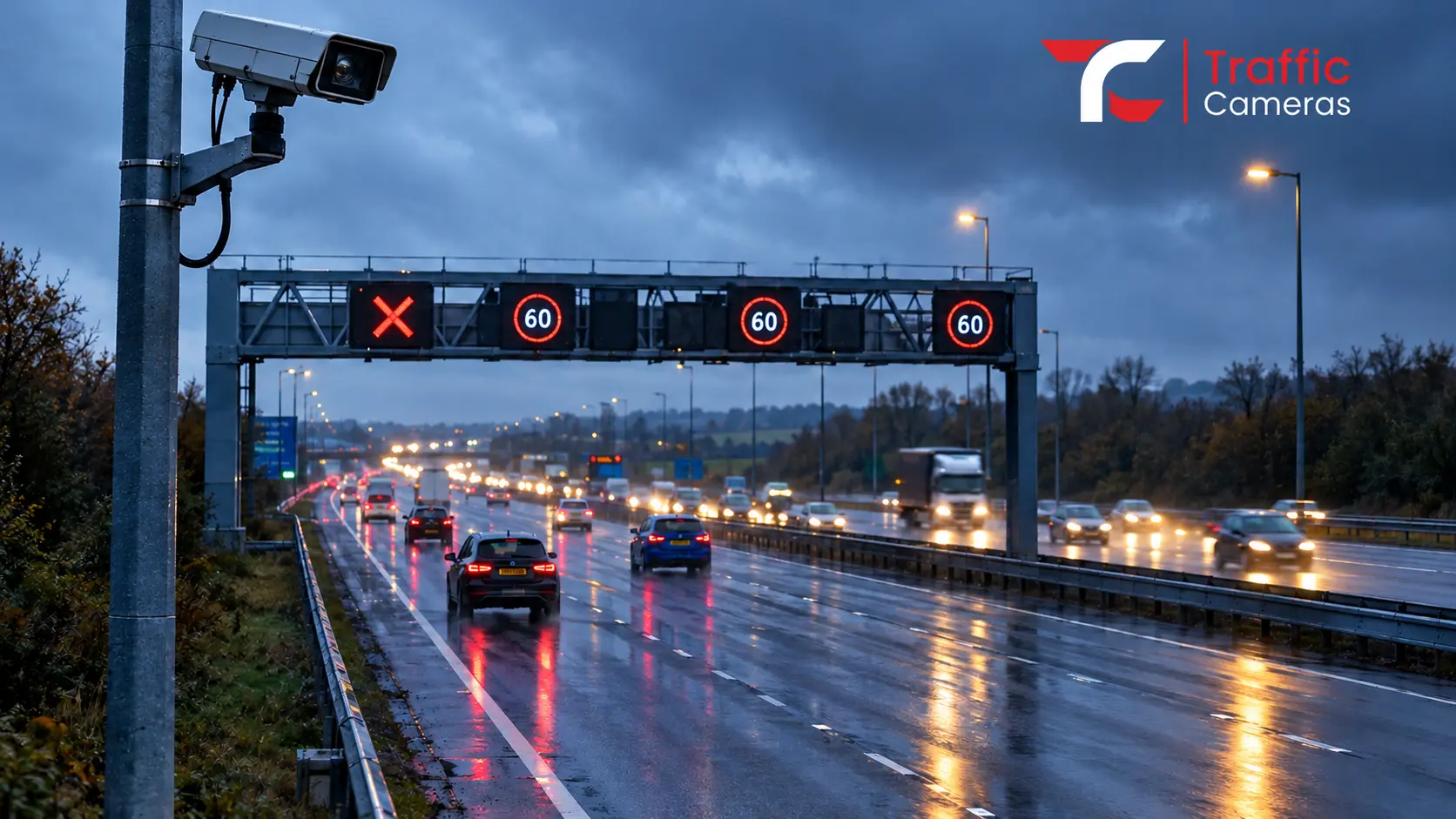
Smart motorways use cameras, electronic signs, sensors and other technology to manage traffic and improve the way busy motorway sections operate.
Smart motorways use cameras, electronic signs, sensors and other technology to manage traffic and improve the way busy motorway sections operate. However, many UK drivers are unsure about what smart motorway cameras actually detect, whether every camera issues fines, and how variable speed limits are enforced.
There are also plenty of smart motorway camera myths online. Some drivers believe every camera is constantly recording speeding offences, while others think a variable speed limit is only advisory.
The reality is more specific. Smart motorway systems use different types of cameras and technology for different purposes. Understanding how they work can help drivers respond correctly to speed limits, Red X signs and other motorway signals.
What Are Smart Motorway Cameras Used For?
Smart motorways can use several types of technology, including CCTV cameras, enforcement cameras, traffic sensors and stopped vehicle detection systems. These systems do not all perform the same job.
National Highways explains that CCTV cameras can be used by operators to monitor and manage congestion and incidents, while enforcement cameras can be used to deter speeding and drivers who ignore Red X lane closures.
This means seeing a camera on or near a motorway does not automatically mean that it is a speed camera. Some cameras are primarily used for traffic monitoring and incident management. Others are designed for enforcement.
Smart Motorway Camera Myth1: Every Camera Is a Speed Camera?
Myth: Every camera on a smart motorway is there to catch speeding drivers.
Fact: Smart motorways use different camera and monitoring systems.
CCTV cameras allow National Highways operators to monitor motorway conditions and incidents. Enforcement cameras, meanwhile, can enforce variable speed limits and Red X restrictions.
The important point for drivers is that they should not try to identify whether a particular camera is an enforcement camera before following a sign.
If a mandatory speed limit is displayed, drivers should comply with it regardless of which camera equipment is visible.
2 Variable Speed Limits Are Only Advice
Myth: A temporary 50mph or 60mph limit on a smart motorway is only a recommendation.
Fact: A speed limit displayed inside a red circle is legally enforceable.
Variable speed limits are used to manage traffic, congestion, hazards and incidents. The displayed limit can be lower than the national motorway speed limit.
Government guidance confirms that enforcement cameras can enforce displayed variable speed limits. The enforcement system is designed to select the appropriate threshold according to the speed limit being displayed.
Therefore, if a gantry displays a mandatory 50mph limit, drivers should treat 50mph as the legal limit for that section.
3 You Can Speed Up Immediately After Passing a Camera
Myth: Once a driver has passed a camera, the previous speed limit no longer matters.
Fact: The displayed speed limit applies to the relevant section of road, not simply to the location of one camera.
Drivers should continue following the signs until the restriction ends or another limit is displayed.
The enforcement rules for variable speed limits also include technical requirements concerning the displayed limit and how long it has been displayed.
The safest approach is simple: follow the current displayed limit rather than trying to judge where a camera's enforcement zone ends.
4 Red X Signs Are Just Warnings
Myth: A Red X above a motorway lane means drivers should move over if convenient.
Fact: A Red X means the lane is closed and drivers must not use it.
Red X signals are used to close lanes, including when an obstruction or stopped vehicle has been identified. Enforcement cameras can also detect vehicles passing under a Red X or entering a lane beyond the closure.
Ignoring a Red X can therefore lead to enforcement action. Drivers should move out of a closed lane as soon as it is safe to do so and should never deliberately continue through a Red X.
5 Smart Motorway Cameras Only Work in Daylight
Myth: Cameras are less likely to enforce speed limits at night or in poor weather.
Fact: Drivers should not assume that darkness, rain or other conditions make enforcement cameras ineffective.
Smart motorway systems are designed to operate as part of an integrated motorway management system. CCTV, enforcement cameras, traffic detection and electronic signs work together to manage traffic and incidents.
Drivers should therefore follow the displayed limits at all times rather than relying on assumptions about when cameras are active.
6 Every Camera Flashes
Myth: A driver will always see a visible flash if a smart motorway camera detects an offence.
Fact: Drivers should not rely on seeing a flash to determine whether enforcement has taken place.
Modern enforcement systems can operate without the traditional appearance many drivers associate with older fixed speed cameras.
The absence of an obvious flash does not mean that a driver can ignore the displayed speed limit.
7 Smart Motorway Cameras Cannot Detect Red X Violations
Myth: Cameras on smart motorways only enforce speeding.
Fact: Enforcement cameras can also be used to detect Red X violations.
National Highways states that its smart motorway enforcement cameras have been upgraded to detect vehicles passing under a Red X or entering a lane beyond a Red X.
This is important because a closed lane may contain a stopped or broken-down vehicle, creating a serious collision risk.
8 All Smart Motorways Work Exactly the Same Way
Myth: Every smart motorway has identical technology and operates in exactly the same way.
Fact: Smart motorways can include different designs and combinations of technology.
National Highways identifies different types, including controlled motorways, dynamic hard shoulder motorways and all-lane-running motorways. Their features can differ, including the use of hard shoulders, emergency areas and stopped vehicle detection.
Drivers should therefore pay attention to the signs and road markings on the specific motorway they are using.
A Recent Camera Issue Drivers Should Know About
There is one recent development worth separating from the usual motorway camera myths.
In December 2025, the Department for Transport confirmed that an anomaly had been identified involving some variable speed cameras and variable speed signs on certain A-roads and motorways. The issue caused a small number of drivers to be incorrectly detected after a speed limit changed.
The Government subsequently announced an independent review into how the technical anomaly occurred and how it was handled.
This does not mean drivers should ignore variable speed limits. It highlights why claims about smart motorway cameras should be based on official information rather than social media rumours.
How Drivers Should Respond to Smart Motorway Signs
The easiest way to avoid problems is to concentrate on the signs rather than trying to work out which camera is watching.
Drivers should:
- Follow every displayed mandatory speed limit.
- Never drive through a Red X.
- Watch overhead gantries and electronic signs.
- Leave a closed lane as soon as it is safe.
- Follow lane markings and motorway signs.
- Slow down when traffic, weather or an incident requires it.
- Know where emergency areas are located when travelling on all-lane-running sections.
- Check current road conditions before a long journey.
Smart motorway technology is designed to help operators monitor traffic, manage incidents and enforce certain restrictions.
Check UK Motorway Traffic and Cameras Before Your Journey
Understanding smart motorway camera myths can help drivers avoid common misunderstandings, but the most useful information is always the current road situation.
Before travelling, drivers can check relevant motorway traffic cameras and road information on Traffic Cameras.info to get a better picture of conditions along their route.
Conclusion
Smart motorway cameras are not all designed to do the same job. Some systems provide CCTV monitoring, while enforcement cameras can enforce variable speed limits and Red X lane closures.
The biggest lesson is that drivers should not rely on myths about camera locations, flashes or operating hours. A speed limit displayed in a red circle should be treated as a legal limit, and a Red X means the lane is closed.
Rather than trying to work out whether a camera is active, drivers should follow the signs, observe lane closures and check current traffic information before setting off.
For live road information, check the relevant traffic cameras and motorway conditions on TrafficCameras.info before your journey
FAQs
1. Do all smart motorway cameras catch speeding drivers?
No. Smart motorways use different types of cameras. Some are used for traffic monitoring and incident management, while enforcement cameras can detect certain speeding and lane violations.
2. Are smart motorway variable speed limits legally enforceable?
Yes. A mandatory variable speed limit displayed in a red circle is legally enforceable. Drivers should follow the displayed limit until it changes or ends.
3. Can smart motorway cameras detect Red X violations?
Yes. Enforcement cameras can be used to detect vehicles travelling in lanes closed by a Red X. Drivers must not enter or continue in a lane displaying a Red X.
4. Do smart motorway speed cameras always flash?
No. Drivers should not rely on seeing a visible flash to determine whether a camera has detected an offence. The safest approach is to follow the displayed speed limit.
5. How can drivers check smart motorway traffic before travelling?
Drivers can check relevant live traffic cameras and road information on TrafficCameras.info before starting their journey. This can help them understand current conditions and plan their route.