
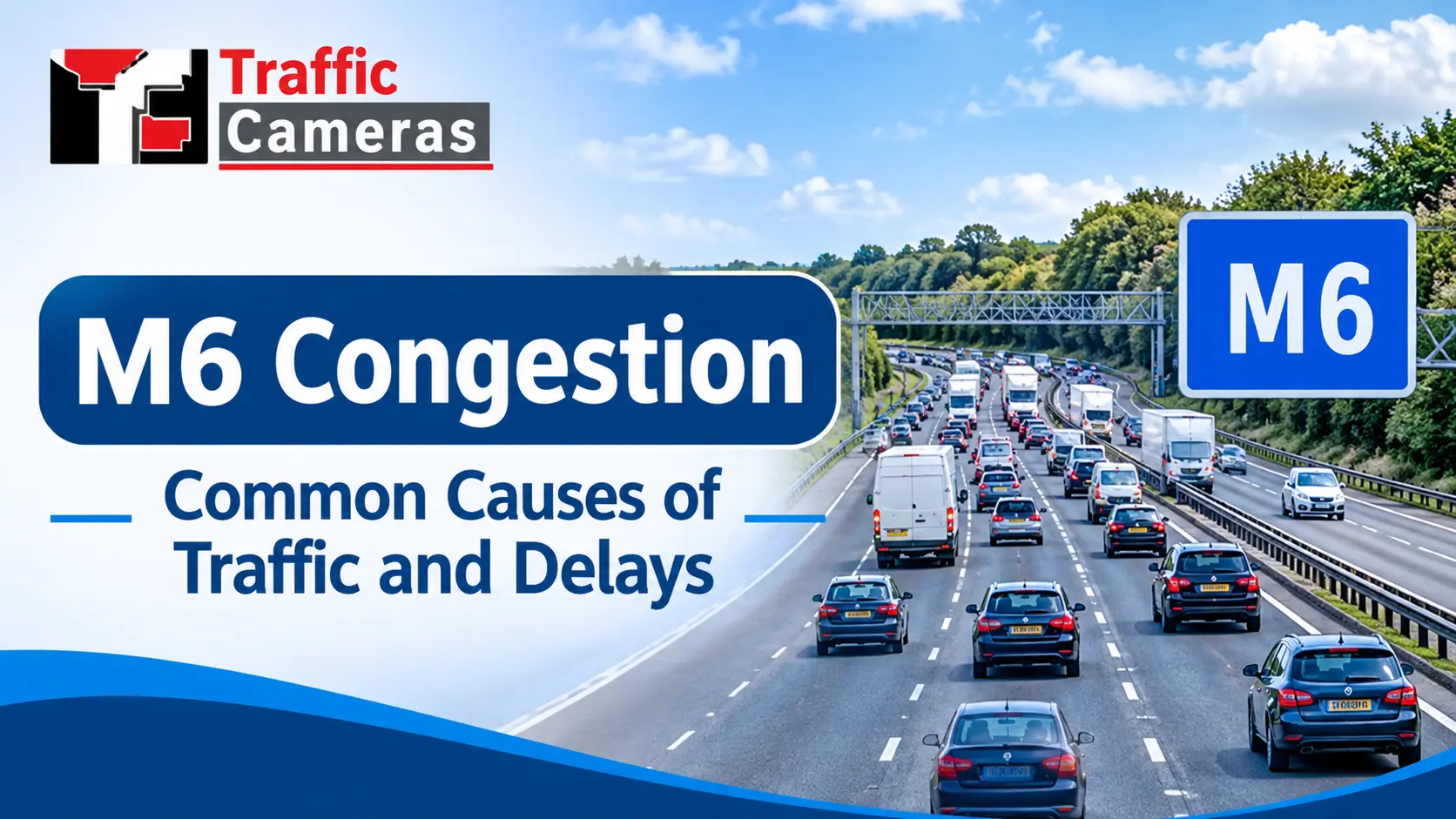
Learn why the M6 experiences congestion, which junctions get busy and the main causes of motorway traffic delays. Get practical tips to plan your journey.
The M6 is one of the UK's most important motorways, connecting major towns and cities across the Midlands and North West. It carries commuters, freight vehicles and long-distance travellers every day. However, heavy traffic, busy junctions and unexpected incidents can make journeys slower than expected.
Understanding the common causes of M6 congestion can help drivers plan their journeys, avoid unnecessary delays and make better decisions before setting off.
What Causes Congestion on the M6?
Several factors contribute to traffic congestion along the M6. Some sections experience regular delays during peak travel periods, while other areas become busy because of roadworks, accidents or increased traffic volumes.
1. Heavy Traffic Around Major Cities
The M6 passes through several important urban and industrial areas, including Birmingham, Wolverhampton, Stoke-on-Trent, Warrington and Preston.
These locations generate significant daily traffic from commuters, businesses and delivery vehicles. When large numbers of drivers use the same motorway sections, traffic can slow down, particularly during weekday morning and evening rush hours.
The West Midlands section is particularly important because it connects several major routes, including the M5, M42 and M54.
2. Busy Motorway Junctions
Junctions are common locations for traffic delays because vehicles enter and leave the motorway, creating merging and lane-changing movements.
Some sections around Birmingham and Warrington experience particularly high traffic volumes.
For example, M6 Junction 10 near Walsall has experienced significant congestion, including queues on the roundabout, slip roads and connecting local roads.
Drivers should also allow extra time when travelling through major interchanges, especially during busy commuting periods.
3. Roadworks and Lane Closures
Maintenance work and motorway improvement projects can affect traffic flow along the M6. Temporary lane closures, reduced speed limits and restrictions around work areas may reduce the available road capacity. Even when roadworks are planned, traffic can build up if several lanes are affected or vehicles slow down to pass through the work zone.
Checking planned roadworks before travelling can help drivers prepare for possible delays.
4. Accidents and Unexpected Incidents
Road accidents, broken-down vehicles and other unexpected incidents can cause sudden M6 congestion. When an incident blocks a lane, traffic may need to merge into the remaining available lanes. This can create queues that extend beyond the original location.
Some incidents also require emergency services to close sections of the motorway temporarily. Drivers should follow overhead signs and instructions from traffic management authorities.
5. Heavy Goods Vehicles and Freight Traffic
The M6 is an important route for commercial transport across the UK. Heavy goods vehicles use it to move products between distribution centres, warehouses, manufacturing areas and ports.
HGVs require more space and time to accelerate or change lanes than smaller vehicles. High volumes of freight traffic, particularly around busy junctions, can contribute to slower traffic movement.
Which Parts of the M6 Can Experience Heavy Traffic?
Although congestion can occur anywhere along the motorway, certain sections carry particularly high traffic volumes.
Birmingham and the West Midlands: Traffic around Junctions 4 to 11 can become busy because of connections with major urban roads and other motorways.
Walsall and Great Barr: Junctions 8 and 9 serve important local and regional routes, making this section a significant traffic corridor.
Warrington: The area around Junctions 20 and 21 connects several important routes and carries substantial traffic.
Preston: Traffic around Junctions 30 and 31 can increase due to local journeys and connections towards Lancashire.
Traffic conditions vary throughout the day, so these locations should not be treated as permanently congested.
How Can Drivers Avoid Unnecessary M6 Delays?
Drivers cannot prevent every traffic delay, but a little preparation can make motorway journeys easier.
Check traffic conditions before leaving home.
Allow extra journey time during weekday rush hours.
Look for planned roadworks and temporary lane restrictions.
Follow motorway signs and obey temporary speed limits.
Avoid sudden braking and maintain a safe distance from other vehicles.
Consider alternative routes when significant delays are reported.
It is also useful to check conditions along your intended route rather than relying on information about just one junction.
Check M6 Traffic Conditions Before Your Journey
Planning ahead can help you make more informed decisions when travelling on the M6. Traffic conditions can change quickly because of accidents, roadworks, vehicle breakdowns and changing traffic volumes.
You can use M6 traffic cameras to check available camera views along the motorway and get a better understanding of conditions at different locations.
Final Thoughts
M6 congestion is influenced by several factors, including heavy commuter traffic, busy junctions, freight movements, roadworks and unexpected incidents. Some sections experience greater traffic pressure than others, particularly around major urban areas and motorway interchanges.
Checking traffic conditions before travelling and allowing additional time can help reduce the impact of unexpected delays. A little journey planning can make travelling on the M6 more predictable.
Frequently Asked Questions
1. Why is the M6 always so busy?
The M6 carries high volumes of commuter, freight and long-distance traffic. Busy junctions, roadworks and incidents can contribute to regular congestion, particularly around Birmingham and the North West.
2. Which parts of the M6 experience the most congestion?
Sections around Birmingham, Walsall, Warrington and Preston can experience heavy traffic due to busy junctions, connecting motorways and high traffic volumes.
3. What are the main causes of M6 traffic delays?
Common causes include road accidents, vehicle breakdowns, motorway roadworks, lane closures, heavy goods vehicles and increased traffic during peak hours.
4. What is the best time to travel on the M6?
Travelling outside weekday morning and evening rush hours may help avoid some congestion. However, traffic conditions can change because of incidents and roadworks.
5. How can I check traffic conditions on the M6 before travelling?
You can check available live camera feeds on our M6 traffic cameras page to view motorway conditions and plan your journey.